The Map is Not the Territory
Say Wut!
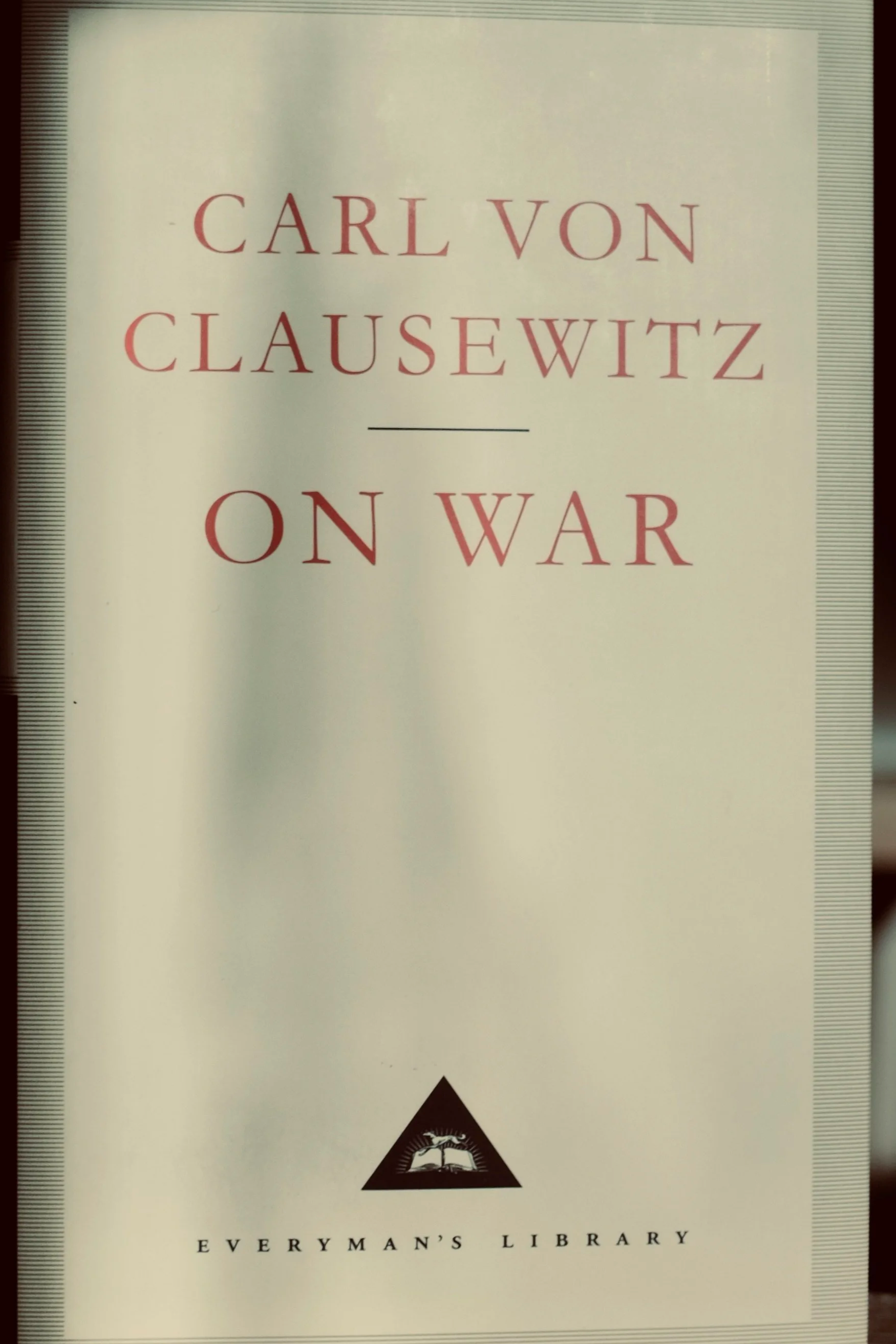
You can smell a war room before you see it. It’s a cocktail of stale tobacco, cold coffee, and the acrid sweat of men who know they are sending other men to die. On the table lies a map—pristine, geometric, precise. It promises order. It lies.
Carl von Clausewitz knew this lie intimately. In Book Three, Chapter Two of On War, he strips away the gold braid and the parade-ground polish to expose the rusted, bloody gears of the machine. He calls them the Elements of Strategy. It sounds academic, doesn’t it? Like something you’d discuss over sherry at the club. But make no mistake: this isn’t a recipe for a dinner party. It is the calculus of survival in a world that is actively trying to kill you.
The Ghost in the Machine
Clausewitz starts with the things you cannot touch, count, or put on a ledger. The Moral Factors. You can have the finest rifles in Christendom, but if the man holding the weapon has a spine made of jelly, you have nothing.
It is the fire in the belly or the hollow pit of fear in the gut. It is the mood of the regiment when the rain hasn’t stopped for three days, and the rations are rotting. It is the commander’s will—that steel rod that keeps him standing when the reports coming in are nothing but disaster. These factors are the twitch in the wire. They are unseen, spectral, but they turn the tide faster than a fresh battalion. Ignore them, treat your men like automatons, and you will lose. It is as simple and as brutal as that.
The Weight of Iron
Then, of course, there is the Physical. The hammer itself. This is the stuff the politicians like to count because it fits neatly on a spreadsheet. How many bayonets? How many cannons are ready to spit fire? Are the troops seasoned killers or raw conscripts who will break at the first volley?
This is the raw mass you throw around. It matters, certainly. God is on the side of the big battalions, as they say. But mass without direction is just a mob waiting to be butchered.
The Geometry of Dirt
Clausewitz gives a nod to the Geometrical Factor—the lines, the angles, the arcs of attack. It sounds like a blueprint, a way to impose logic on chaos. But you cannot draw a straight line through a swamp.
This brings us to the Terrain. The ground isn’t just scenery; it is a participant. The mud that sucks the boots off your infantry, the hill that hides the enemy’s guns, the river that becomes a grave. The ground shapes the fight. It can be a shield or a trap. A map might show a road, but it doesn’t show the ambush waiting in the treeline. You have to read the dirt, not just the paper.
Feeding the Beast
Finally, there is the ugly, unglamorous necessity: Logistics. You can be a tactical genius, a philosopher-king of warfare, but if your men are starving, you are finished.
It is the bloodless part of the business—counting beans and bullets—but it is the foundation of everything. An army marches on its stomach, and if that stomach is empty, the whole damn structure collapses. It is feeding the beast. Mess it up, and the beast dies.
The Art of the Ugly Truth
Strategy, then, is not some high-minded theory. It is the grim task of weighing these elements—the fear, the iron, the mud, and the bread—against one another. It is making impossible choices with incomplete information while the clock ticks down.
The map on the table is clean. The reality is a mess of blood and confusion. Clausewitz teaches us that the strategist’s job isn’t to tidy up the mess, but to wade into it, grab the elements by the throat, and force a victory before the chaos swallows you whole.
The perfect plan exists only in the mind of a fool. In the end, strategy is not about solving the puzzle; it is about surviving the pieces that don’t fit until the enemy breaks first.
Citations
On War by Carl Von Clausewitz - Book 3 - chapter 2


Event Portfolio

Street Portfolio