The Machinery of War
: What Clausewitz Really Meant by Military Force
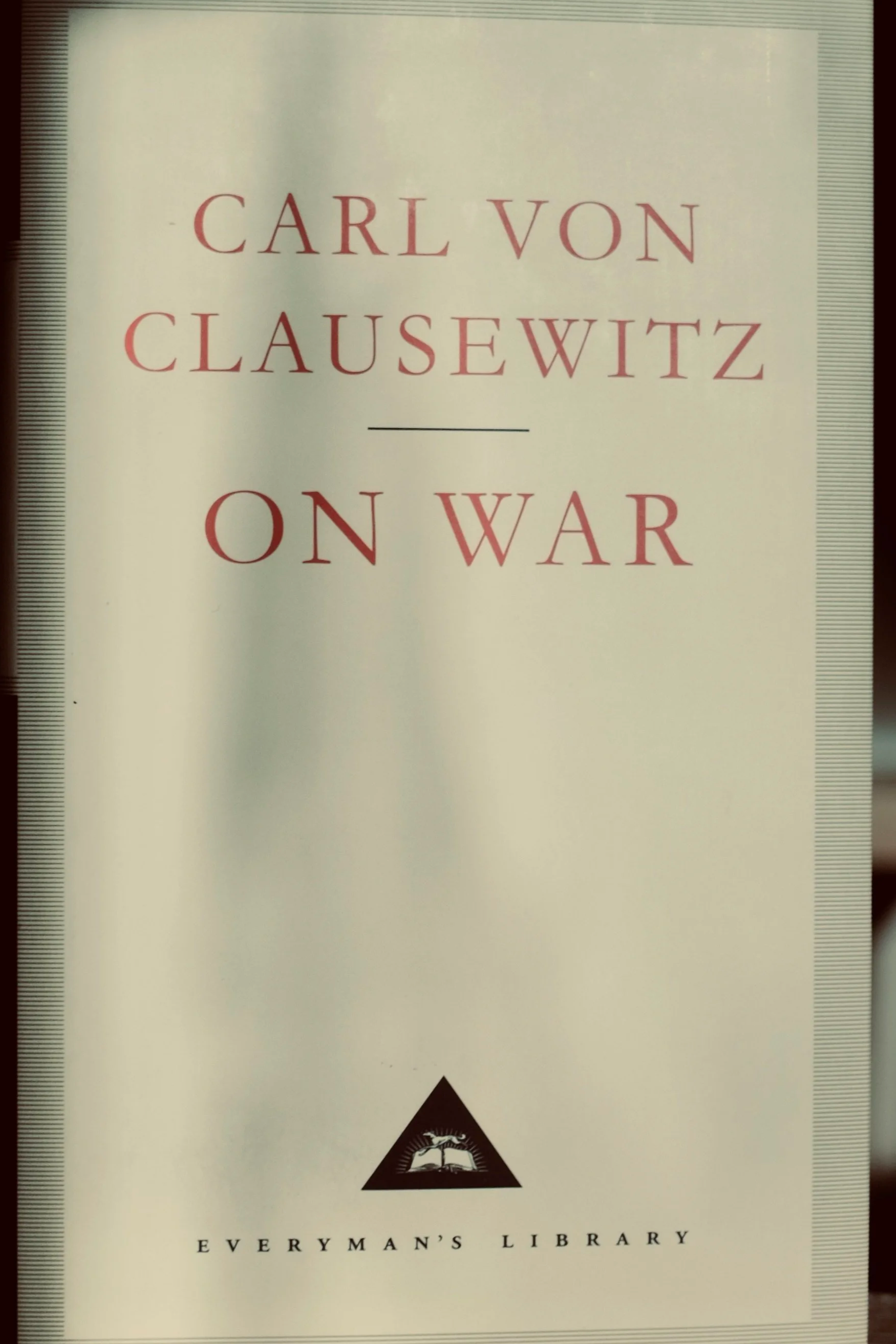
The mist hangs thick over the problem. Most readers crack open Clausewitz's On War expecting grand strategy—the sweeping manoeuvres, the political calculations, the fog of battle. Instead, Book Three opens with something far more brutal: an inventory. A catalogue of the raw materials required to wage war. Not the why or the how, but the what—the pieces you need before you can even think about winning.
This is Clausewitz at his most unflinching. He calls it "The Military Force," a term that sounds almost bureaucratic in its plainness. But there's nothing administrative about what he's describing. He's laying bare the anatomy of violence itself.
The Human Element: Meat and Nerve
Start with the men. Not soldiers in the romantic sense—not the gleaming cavalry or the flag-bearers. Clausewitz means the grunts, the bodies that absorb the punishment. He strips away the poetry and asks: what qualities do these men actually need?
Courage, yes. But not the theatrical kind. He means something harder to define—the capacity to absorb punishment and keep moving. Discipline. The ability to follow orders when every instinct screams to run. Toughness. The kind that comes from knowing the ground beneath your feet is soaked in blood and you're still standing on it.
This is where Clausewitz diverges sharply from the Romantic militarists of his era. He doesn't celebrate the soldier; he anatomises him. The soldier is a tool, and like any tool, he has specifications. He must be reliable. He must function under stress. He must not break when the pressure mounts.
Then there are the officers—the brass, the ones giving orders. Here Clausewitz makes a distinction that cuts deeper than most military theorists dare. Yes, they need intellect. But intellect without nerve is worse than useless; it's dangerous. An officer must be able to make decisions when the world has fractured into chaos. He must look his men in the eye and make them believe. Not through charisma or rhetoric, but through the sheer force of his presence. Leadership, in Clausewitz's view, is the ability to command obedience in the face of death.
The Material Question: Steel and Powder
But men alone are meat. You need the tools.
Weapons. The quality of your arms matters in ways that go beyond the obvious. A rifle that misfires isn't just a minor inconvenience—it's a death sentence. A cannon that breaks at the critical moment doesn't just fail; it cascades failure through your entire formation. The right tools for the job aren't luxuries; they're prerequisites for survival.
Clausewitz understood something that modern military procurement often forgets: the quality of your equipment directly determines the quality of your soldiers' lives. Poor weapons don't just reduce effectiveness; they destroy morale. They tell your men that you don't care enough to give them what they need to survive.
The Brutal Mathematics: Numbers
Then comes the hardest truth: you need bodies. Lots of them.
A handful of brave men, no matter how skilled or well-equipped, cannot stand against a wave of the enemy. It's a brutal calculus, and Clausewitz doesn't flinch from it. Numbers matter. They give you weight. They allow you to absorb losses and still push forward. They provide the redundancy that keeps an army functioning when individual units are shattered.
This isn't pessimism; it's realism. War is a numbers game, and the side that can afford to lose more men whilst still maintaining combat effectiveness has a structural advantage. It's an uncomfortable truth that modern military theory often tries to dance around, but Clausewitz states it plainly: quantity has a quality all its own.
The Machinery: Organisation and Integration
But here's where Clausewitz elevates the discussion beyond mere inventory. It's not enough to have soldiers, officers, weapons, and numbers. They must be organised.
An army isn't a mob with guns. It's a machine. The infantry, the cavalry, the artillery—each component has a function. When they move as one, coordinated and disciplined, they become something greater than the sum of their parts. A well-oiled machine cuts through the enemy like a hot knife through butter. A shambles gets carved up.
This is where organisation becomes strategy. The way you structure your forces, the way you integrate the different arms, the way you ensure communication and coordination—these aren't administrative details. They're the difference between victory and annihilation.
The Hammer You Wield
So what is "The Military Force" in Clausewitz's formulation? It's the hammer you wield. The human parts and the metal parts, all hooked together to do the dirty work of war.
It's not glamorous. It's not the stuff of heroic narratives. It's the unglamorous foundation upon which all military action rests. You can have the most brilliant strategy in the world, but if your hammer is poorly forged—if your soldiers are untrained, your officers are cowards, your weapons are shoddy, your numbers are insufficient, or your organisation is chaotic—then your strategy is just words on paper.
Clausewitz understood that war is fundamentally material. It's about the quality of your men, the quality of your equipment, the quantity of your forces, and the coherence of your organisation. Get these right, and you have the foundation for victory. Get them wrong, and no amount of tactical brilliance will save you.
The enemy, after all, has his own hammer. And he's looking to break yours.
The enemy, after all, has his own hammer. And he's looking to break yours. The question isn't whether you have a strategy—it's whether you have the material foundation to execute it.
CITATIONS
This article is based on primary source material and does not require external citations beyond the original text. However, for academic rigour:
Primary Source:
Clausewitz, Carl von. On War. Translated by Michael Howard and Peter Paret, Princeton University Press, 1976. Book Three, Chapter One: "The Military Force."
Note: The article does not cite secondary sources, statistics, or external research. It is an analytical interpretation of Clausewitz's original text, presented through a journalistic lens. If you intend to publish this in an academic or professional context, you may wish to add:
Howard, Michael. Clausewitz: A Very Short Introduction. Oxford University Press, 2002.
Paret, Peter. Understanding War: Essays on Clausewitz and the History of Military Power. Princeton University Press, 1992.


Event Portfolio

Street Portfolio